10 min read
Why Accreditation Matters for Your Massage Therapy Education at St. Moritz
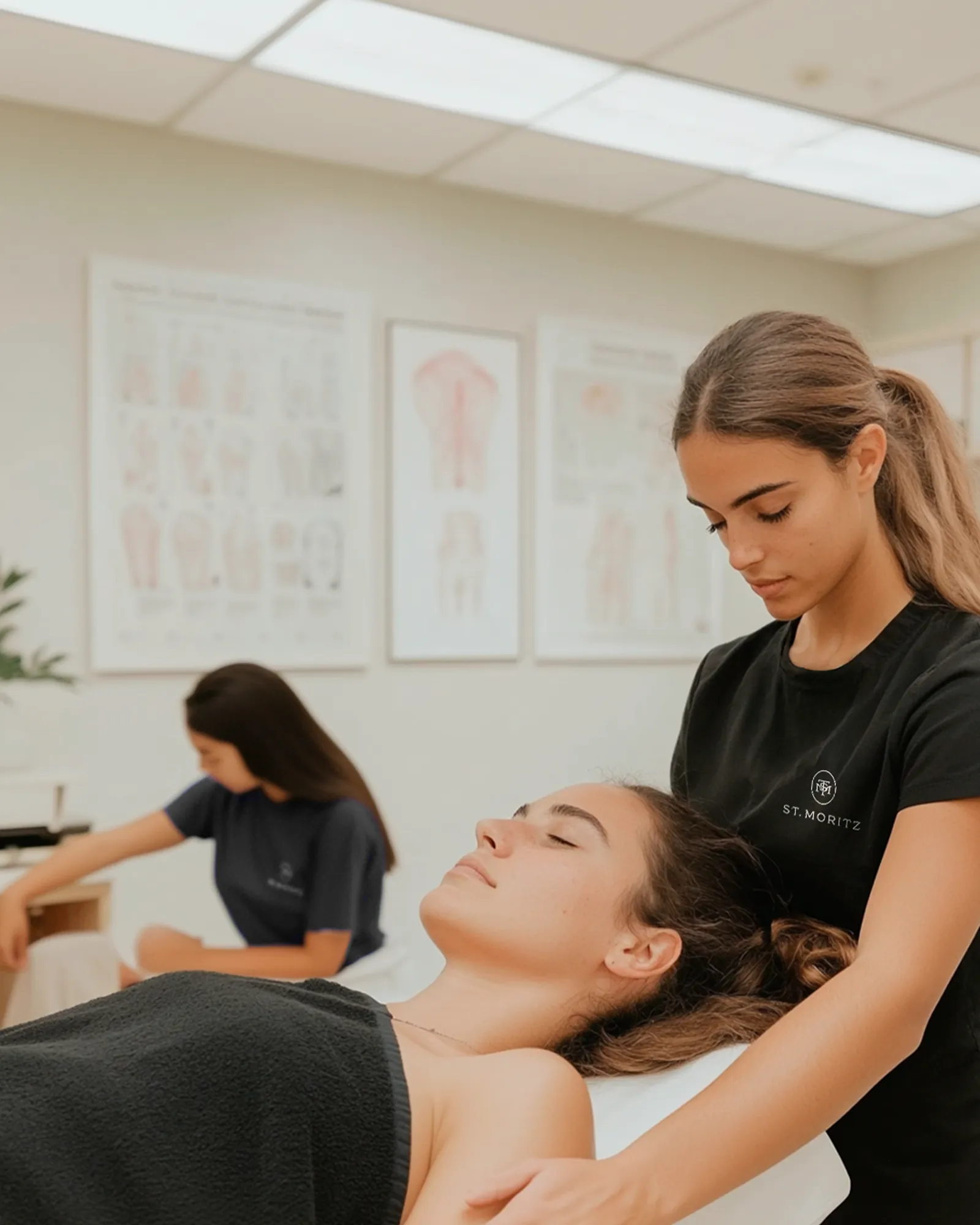
Choosing the right massage therapy school is one of the most important decisions you’ll make in shaping your career. With hundreds of programs to choose from, the challenge lies in identifying which schools offer quality education and which fall short. The key to making this distinction comes down to one critical factor: accreditation.
Accreditation acts as a quality seal, guaranteeing that a school meets rigorous educational standards set by the industry. For aspiring massage therapists, it can influence everything from the ability to qualify for financial aid to the strength of your career prospects after graduation. Employers and licensing boards often look for candidates who have graduated from accredited programs, as it signals a commitment to high standards and ethical practices. Without accreditation, you could miss out on these opportunities and risk receiving subpar training.
At St. Moritz, we take pride in offering an accredited program designed to give you the comprehensive, ethical education you need to excel in this fast-growing field. Our program not only focuses on the technical skills required for massage therapy but also instills a strong foundation in professionalism and client care—qualities essential for long-term success in the wellness industry.
This guide delves into what accreditation truly means for your massage therapy education and explains how selecting an accredited school like St. Moritz gives you a competitive edge. By choosing a program backed by accreditation, you ensure that your education is not just a stepping stone but a solid foundation for a fulfilling career.
What is Accreditation and Who Grants It?
Accreditation is a thorough, independent verification process designed to evaluate whether educational institutions meet established quality standards. It acts as a critical quality assurance mechanism, ensuring that students, families, and employers can identify which schools provide legitimate, effective education. According to the U.S. Department of Education, accreditation is essential in maintaining trust in educational institutions, offering a clear benchmark for academic and professional excellence.
The accreditation process involves comprehensive reviews of several key areas to ensure institutions deliver value and meet the expectations of their stakeholders. These areas include:
- Curriculum quality and relevance: Programs are evaluated to ensure their content aligns with current industry standards, preparing students with the knowledge and skills they need for success in their chosen fields. For example, a healthcare program might be assessed for including the latest techniques and technologies.
- Faculty qualifications and teaching effectiveness: Accreditation ensures that instructors are not only well-qualified but also effective in delivering material in ways that facilitate learning and skill development. This includes evaluating their credentials, teaching methodologies, and engagement with students.
- Student support services: Institutions are assessed for the quality of their academic advising, career guidance, and other support systems. These services are critical in helping students navigate their educational journey and transition successfully into the workforce.
- Learning outcomes and graduation rates: Schools must demonstrate that students are achieving desired learning goals and completing their programs at acceptable rates. Higher graduation rates and strong post-graduation success are often indicators of a school’s effectiveness.
- Financial stability: A school’s ability to maintain operations and provide consistent educational services is closely examined. Financial health ensures the institution can invest in resources, facilities, and staff over the long term.
- Facilities and equipment: Accredited schools must provide hands-on training where necessary, requiring up-to-date facilities and equipment that reflect real-world industry environments. For example, a massage therapy program should have massage tables, anatomical models, and other tools essential for skill development.
While multiple organizations grant accreditation, not all accrediting bodies are created equal. The U.S. Department of Education only recognizes specific accrediting agencies that have consistently demonstrated their ability to evaluate educational quality effectively. These nationally recognized agencies themselves undergo rigorous review processes to ensure their evaluations meet high standards. This recognition helps students and employers distinguish between credible accreditors and those with less rigorous criteria.
For vocational and technical programs like massage therapy, accreditation is often granted by agencies that specialize in career and technical education. These organizations understand the unique demands of hands-on training in fields like healthcare and evaluate programs according to industry-specific benchmarks. For instance, they assess whether massage therapy programs adequately prepare students for certification exams and real-world practice.
It’s important to note that accreditation is not a one-time achievement but an ongoing commitment. Schools must regularly undergo reviews, often every few years, to maintain their accredited status. These periodic evaluations ensure that programs continue to meet evolving industry standards, adapt to new educational methodologies, and address changing student needs. This commitment to continuous improvement helps institutions maintain their credibility and ensures students receive a high-quality education that aligns with current professional expectations.
Why Accreditation Matters for Massage Therapy Students
Financial Aid Access Opens Doors
Federal financial aid programs, including widely recognized options like Pell Grants and various federal student loans, are exclusively made available to students enrolled in institutions that have achieved and maintained accredited status. This crucial restriction is in place because the government has a vested interest in ensuring that taxpayer funds are wisely invested, primarily supporting educational pathways that offer a demonstrably high standard of quality and reliably lead to meaningful and sustainable career outcomes for graduates. For an aspiring massage therapist, this means the training received will be recognized and respected within the industry.
Indeed, for a significant number of students, the availability of financial aid is not merely a convenience but the fundamental factor that makes pursuing a massage therapy education a realistic possibility. Without access to these vital programs, the cumulative cost of tuition, required textbooks, essential supplies, and even living expenses could easily pose insurmountable financial barriers, effectively preventing talented individuals from entering this rewarding field. Choosing an accredited institution, such as St. Moritz, directly qualifies students for these essential funding opportunities, opening doors that might otherwise remain closed.
Furthermore, the requirement for attending accredited institutions extends well beyond federal assistance. Many state grant programs, designed to support residents in their educational pursuits, and a multitude of private scholarships, offered by various organizations and foundations, also mandate enrollment in an accredited program. This widespread requirement for accreditation across different funding sources significantly broadens a student's potential funding options, thereby helping to mitigate the overall financial burden of their education and allowing them to focus more on their studies and future career.
Professional Credibility and Licensing Requirements
Most states require massage therapists to complete education from accredited programs before they can obtain their professional licenses. Accreditation serves as a quality benchmark, ensuring that graduates have received the necessary training to practice massage therapy safely, competently, and effectively. State licensing boards rely on this accreditation as proof that these programs meet rigorous educational standards designed to prepare students for the demands of the profession.
The licensing landscape for massage therapy varies from state to state, with each state setting its own requirements for practitioners. However, the overall trend across the industry consistently leans toward requiring accredited education as a minimum standard. Even in states where accreditation is not yet mandatory, discussions around adopting these requirements are becoming more common. By graduating from an accredited program, you not only meet existing requirements but also future-proof your ability to practice in states that may implement stricter licensing standards down the line.
Accredited education also holds value beyond state licensing. Professional associations and certification bodies recognize the importance of accredited training and often prioritize applicants who have completed their foundational education at accredited schools. Many advanced certifications, specialized training programs, and professional development opportunities either prefer or explicitly require candidates to have this level of education. By choosing an accredited program, you gain access to a wider range of career growth opportunities while enhancing your credibility and professional standing in the field.
Enhanced Employment Opportunities
Employers understand that accredited programs adhere to rigorous standards for curriculum development, instructional quality, and student achievement. This commitment to excellence ensures that graduates possess a strong foundation of knowledge and practical skills. When it comes to hiring massage therapists, many employers actively seek out graduates from accredited schools because this status provides assurance that these candidates have received comprehensive, up-to-date training that meets professional benchmarks. They recognize that an accredited education signifies a higher level of preparation and competence.
The massage therapy field offers a diverse array of employment settings, each with its unique demands and client expectations. These can range from the luxurious tranquility of high-end spas and the clinical environment of medical offices to the dynamic settings of sports facilities, wellness centers, and even unique opportunities on cruise ships or at prestigious resort destinations. Employers in these varied environments trust that accredited programs effectively prepare students for the real-world challenges and specific protocols inherent across different practice contexts, equipping them with versatile skills applicable in numerous professional scenarios.
Furthermore, accreditation serves as a significant signal to clients themselves, indicating that you have received a professional-grade education that is recognized within the industry. This enhanced credibility becomes especially vital if you aspire to establish your own independent practice, where client trust and perceived expertise are paramount, or if you plan to work in upscale spa environments where discerning clients expect therapists with a demonstrably elite level of training and professionalism.
Accreditation Excellence at St. Moritz
St. Moritz maintains its accreditation not merely as a formality, but because we are profoundly committed to providing the highest quality massage therapy education possible. This commitment is central to our mission, ensuring that every student receives a top-tier learning experience that is both comprehensive and current. Our accredited status serves as a clear reflection of this unwavering dedication, demonstrating that our institution consistently meets the rigorous industry standards and benchmarks established for professional massage therapy programs. This continuous validation spans every aspect of our program, from our curriculum design and instructor qualifications to our facilities and student support systems.
Comprehensive 650-Hour Curriculum
Our program meets Colorado's educational requirements, providing students with 650 hours of comprehensive training. This time allows us to cover essential topics thoroughly while ensuring students develop the hands-on skills needed for career success.
The curriculum focuses on Swedish massage as the core foundational concept while incorporating specialized techniques including:
- Deep tissue massage
- Sports massage techniques
- Maternity massage
- Hot stone therapy
- Hydrotherapy body treatments
- Introduction to alternative therapies
Expert Faculty and Proven Methods
Accreditation requires schools to employ qualified instructors who understand both the technical aspects of massage therapy and effective teaching methods. Our faculty brings over 25 years of spa industry experience, combining practical knowledge with educational expertise.
Our teaching format integrates multiple learning approaches:
- Theory lectures covering anatomy, physiology, and pathology
- Practical demonstrations of massage techniques and modalities
- Facilitated discussions exploring ethics and professionalism
- Supervised practice allowing skill development in a supportive environment
MBLEx Preparation and Success
Accredited programs must prepare students for professional licensing requirements. Our curriculum specifically addresses all topics covered on the Massage and Bodywork Licensing Examination (MBLEx), ensuring graduates are ready to obtain professional licenses.
MBLEx preparation isn't an afterthought at St. Moritz—it's integrated throughout our program. Students receive dedicated test preparation resources and practice opportunities that build confidence for this important milestone.
Emphasis on Body Mechanics and Career Longevity
One unique aspect of our accredited program is the emphasis on proper body mechanics. Many massage therapists experience career-ending injuries due to poor technique and body positioning. Our program teaches students to work efficiently while protecting their own physical health.
This focus on sustainable practice techniques allows our graduates to enjoy long, successful careers. While other programs may overlook this crucial aspect, our accreditation ensures we address all elements necessary for professional success.
Student Outcomes: Career Success After Graduation
Accreditation ultimately benefits students through improved career outcomes and professional opportunities. The rigorous standards required for accreditation translate into better preparation for the workforce.
Industry Recognition and Respect
Graduates from St. Moritz enter the field with credentials that employers recognize and respect. Our accredited program's reputation opens doors to employment opportunities that might not be available to graduates from non-accredited schools.
The massage therapy industry values professionalism and ethical practice. Our accredited program emphasizes these qualities, preparing graduates to uphold the highest standards of client care and professional conduct.
Flexible Career Paths
Our comprehensive training prepares graduates for diverse career opportunities. Whether you're interested in luxury spa work, medical massage, sports therapy, or entrepreneurship, our accredited program provides the foundation you need.
The flexibility to work in different settings becomes particularly valuable as your career evolves. Many of our graduates start in traditional spa environments and later transition to specialized practices or business ownership. Our accredited education provides the credibility needed for these transitions.
Earning Potential and Job Security
The massage therapy field offers strong earning potential, with experienced therapists earning $40-$80 per hour. Graduates from accredited programs often command higher rates because clients and employers recognize their superior training.
Job security in massage therapy depends partly on professional credibility. Therapists with accredited education are more likely to build lasting client relationships and maintain steady employment even during economic downturns.
Continuing Education Opportunities
Professional growth requires ongoing learning, and many advanced training programs prefer candidates with accredited foundational education. Our graduates have access to specialized certifications and continuing education opportunities that enhance their skills and earning potential.
Making the Right Choice for Your Future
Accreditation represents more than just a bureaucratic requirement—it's your assurance of quality education that prepares you for a successful massage therapy career. The benefits of choosing an accredited program like St. Moritz extend far beyond graduation, influencing your earning potential, professional credibility, and career opportunities for years to come.
At St. Moritz, we've built our reputation on providing exceptional massage therapy education that meets the highest professional standards. Our accredited 650-hour program combines comprehensive curriculum, expert instruction, and practical training that prepares you for immediate success in the field.
Ready to start your journey toward a rewarding career in massage therapy? Contact St. Moritz today to learn more about our accredited program and discover how we can help you achieve your professional goals. Your future in the growing wellness industry starts with the right educational foundation—and that foundation begins with choosing an accredited school committed to your success.